Jämjö 15 July 2021
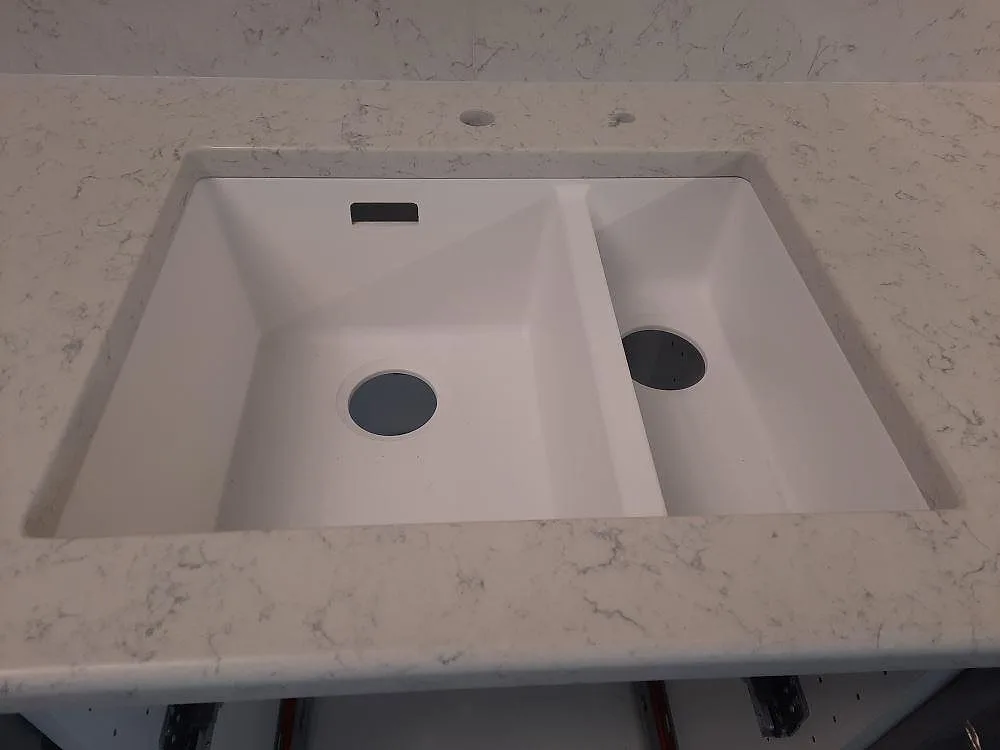
Kitchen worktop in Technistone Noble Carrara, Jämjö
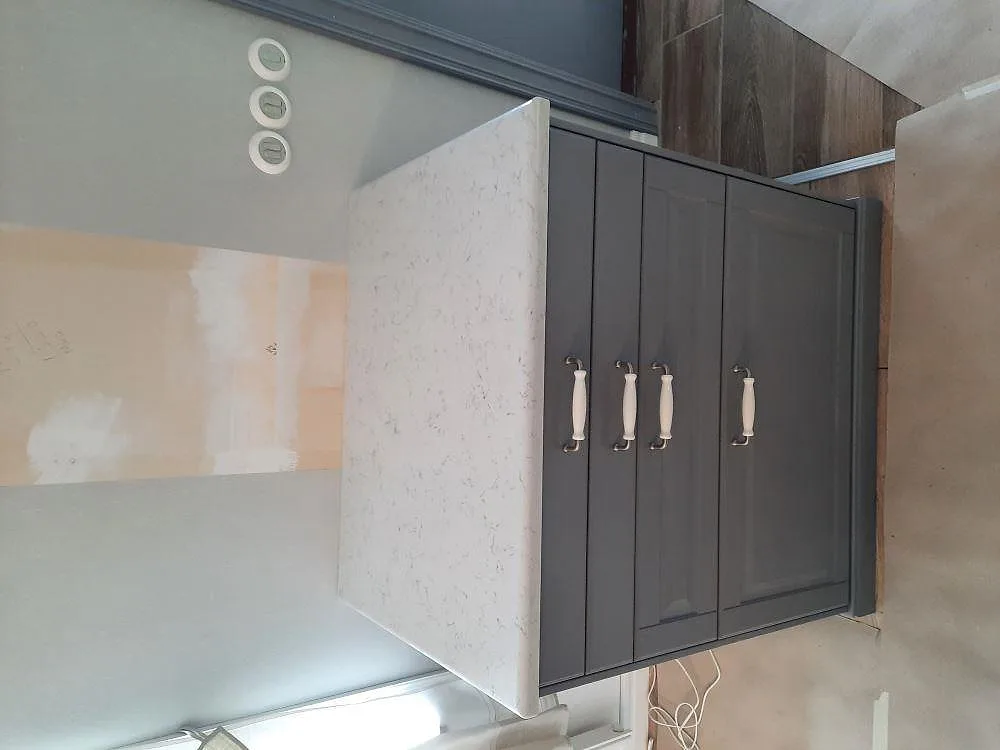
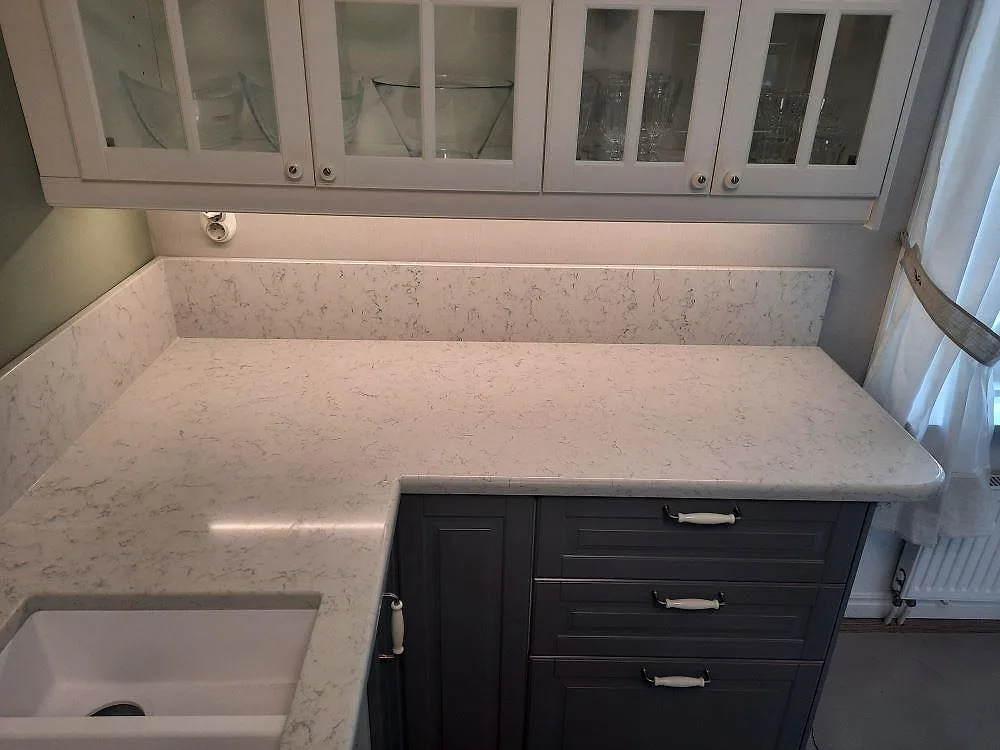
Kitchen worktops and an island in Technistone Noble Carrara, a white quartz composite with pronounced grey Carrara-like veining and a polished surface, 30 mm thick, with a white undermount sink, a black hob mounted on top of the stone and an upstand, set against dark grey cabinet doors in a kitchen in Jämjö.
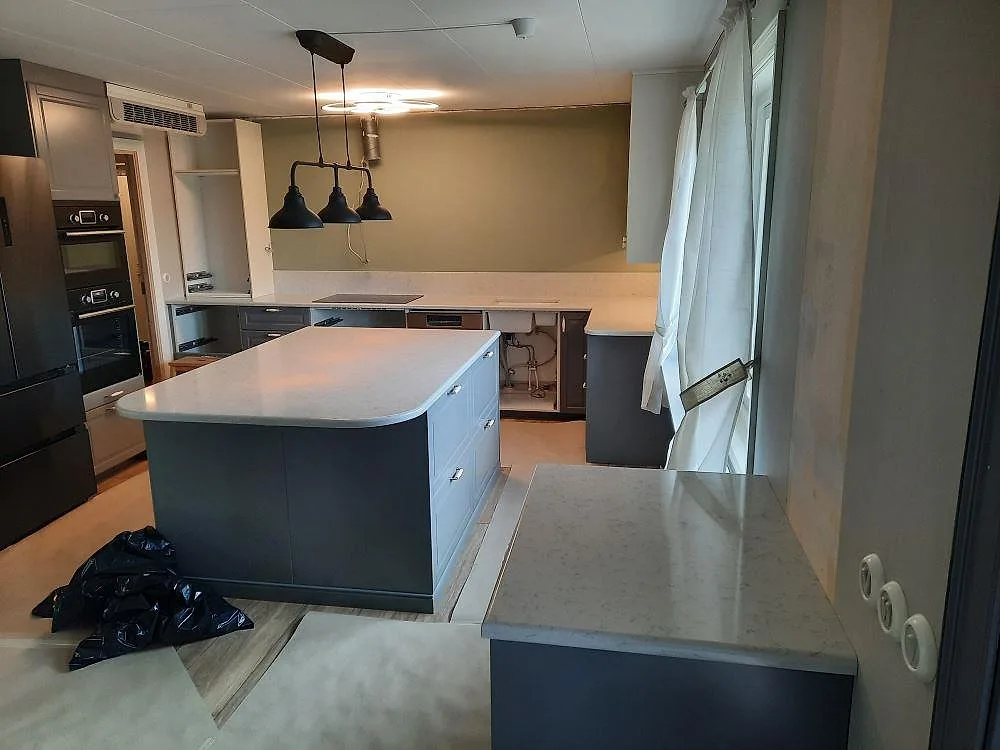
This kitchen in Jämjö has worktops and an island in Technistone Noble Carrara, a white quartz composite with pronounced grey Carrara-like veining and a polished surface. The 30 mm thick stone covers the island and runs along the wall, with a white undermount sink, a black hob mounted on top of the stone and an upstand, set against dark grey cabinet doors with light-coloured handles and white glass-fronted cabinets.
About the material
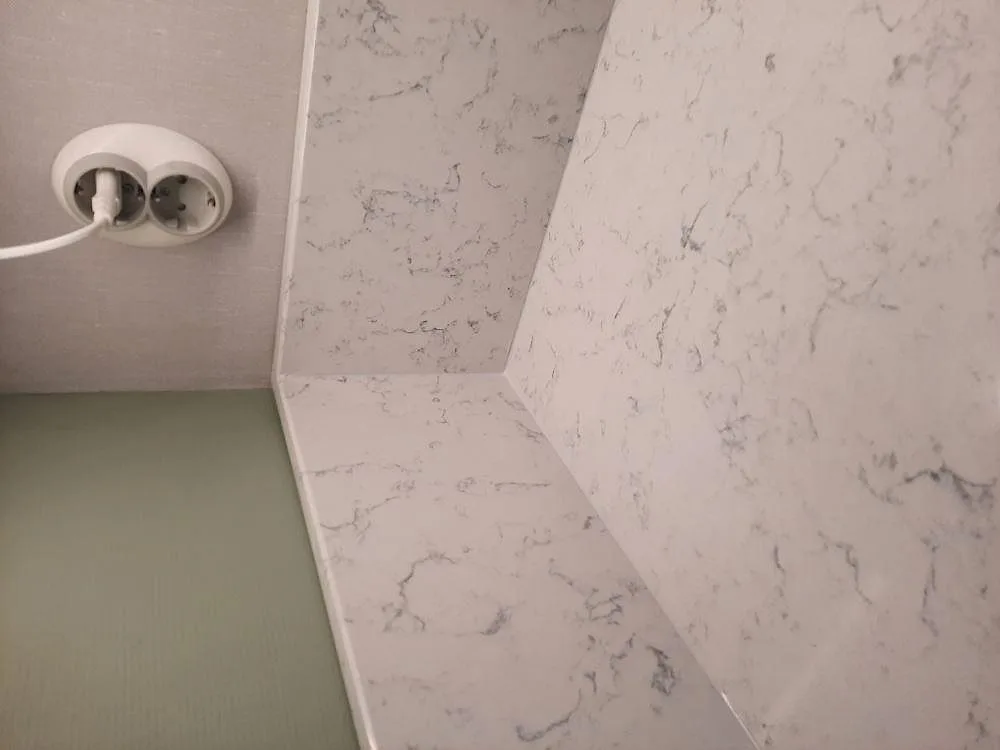
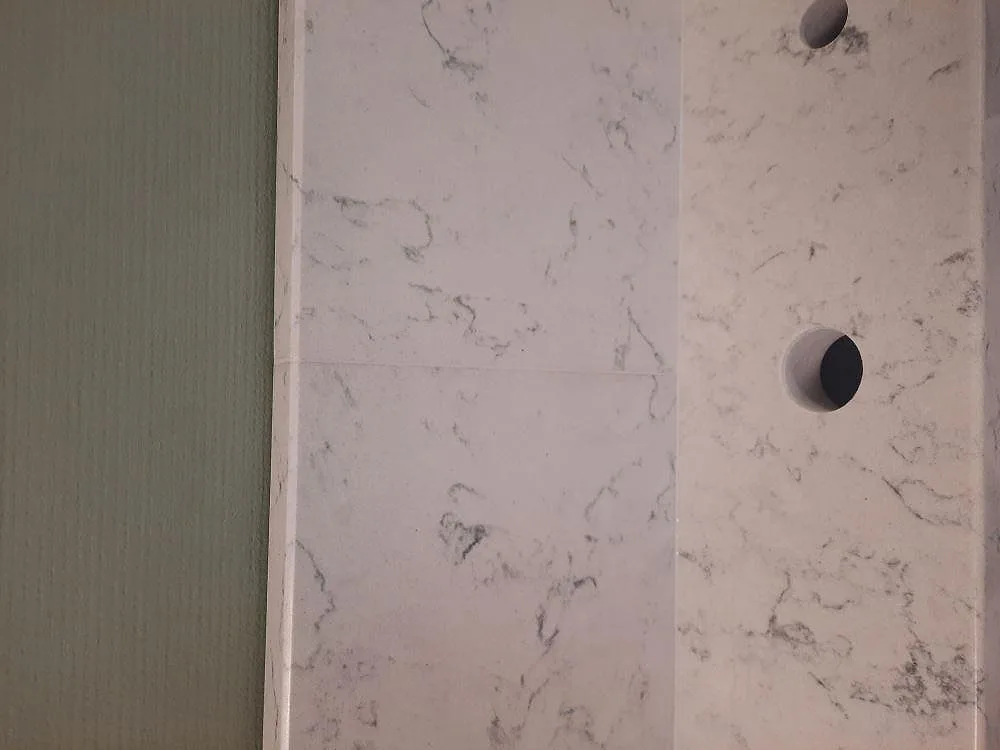
Noble Carrara is characterised by its pronounced grey veining against a white background, a more distinct pattern than that of many other white composites, giving the stone life and movement. The material is a quartz composite made from crushed quartz and binders, creating a dense, hard surface that gains depth and a soft sheen when polished. Its high density makes the stone easy to care for and means it does not need sealing.
This installation
The white stone with its grey veining brightens the space against the dark grey cabinet doors and white glass-fronted cabinets, while a black hob on top of the worktop and a white sink create graphic contrasts. The sink is undermounted to provide a smooth edge around the opening, and the upstand in the same stone replaces tiles with a seamless surface behind the worktop.
Care advice
Everyday cleaning is simple: lukewarm water and a mild washing-up liquid are enough, and no sealing is needed. Avoid scouring pads, steel wool and strong solvents on the glossy surface, and as quartz composite cannot withstand sudden heat, always use a trivet under hot pans.
Worth knowing
Strongly coloured liquids such as red wine, coffee and tea show clearly on the light, polished surface if left to dry, so they should be removed while fresh. The pronounced grey veining is also practical, breaking up the surface so that dust, crumbs and small marks are less visible than on a completely plain white worktop.