Skarpnäck 16 July 2021
Kitchen worktop in Silestone Coral Clay, Skarpnäck
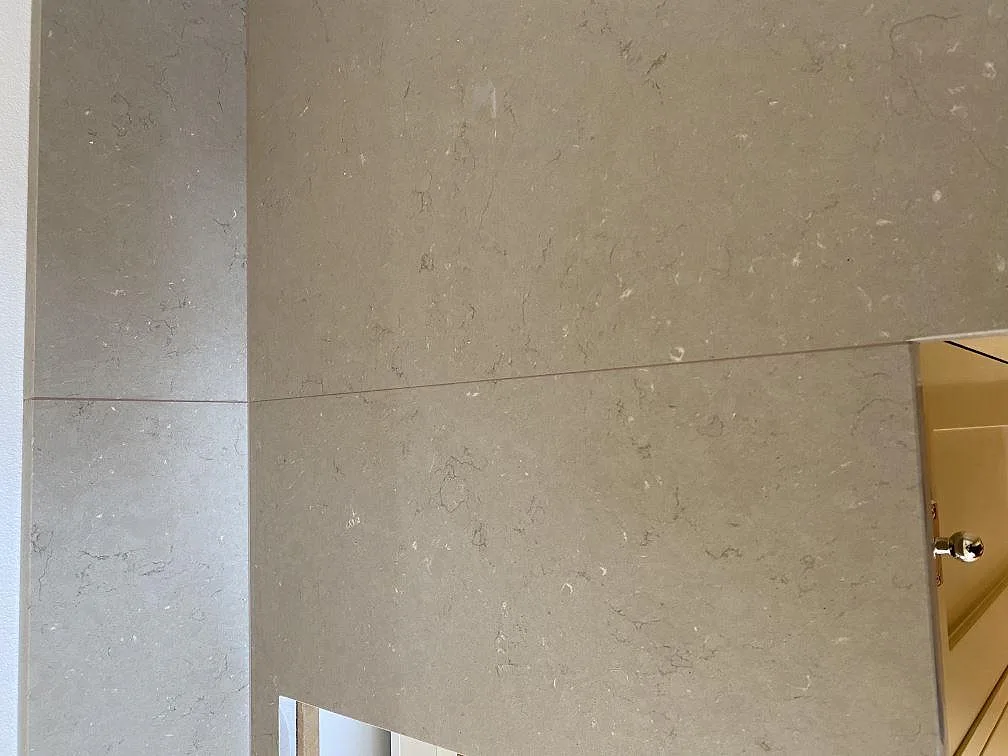
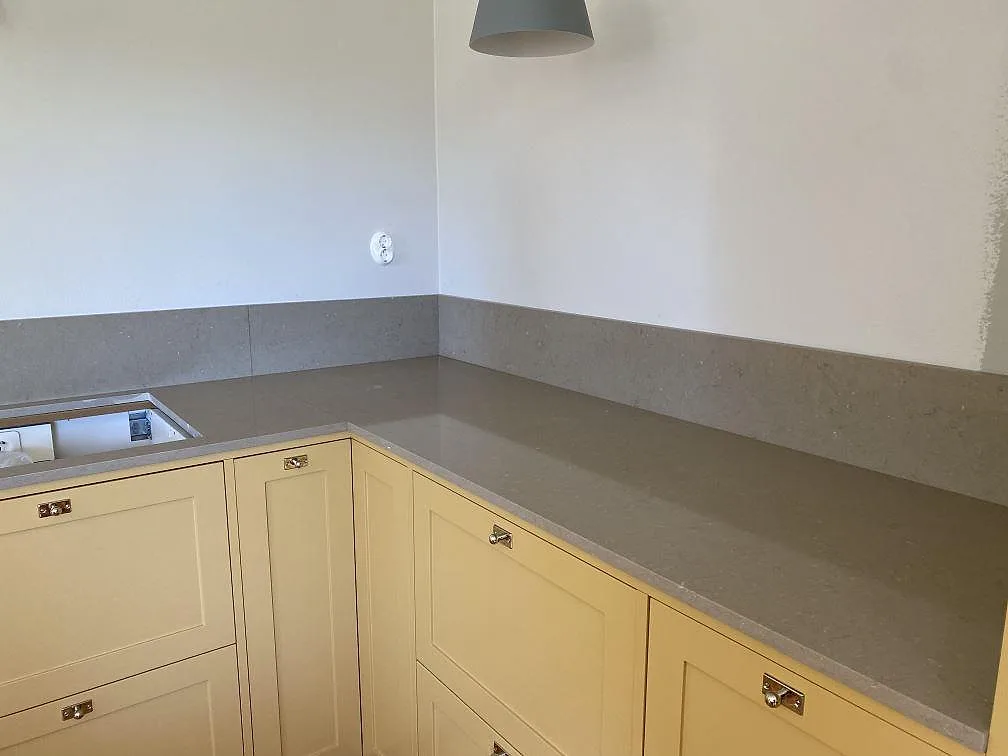
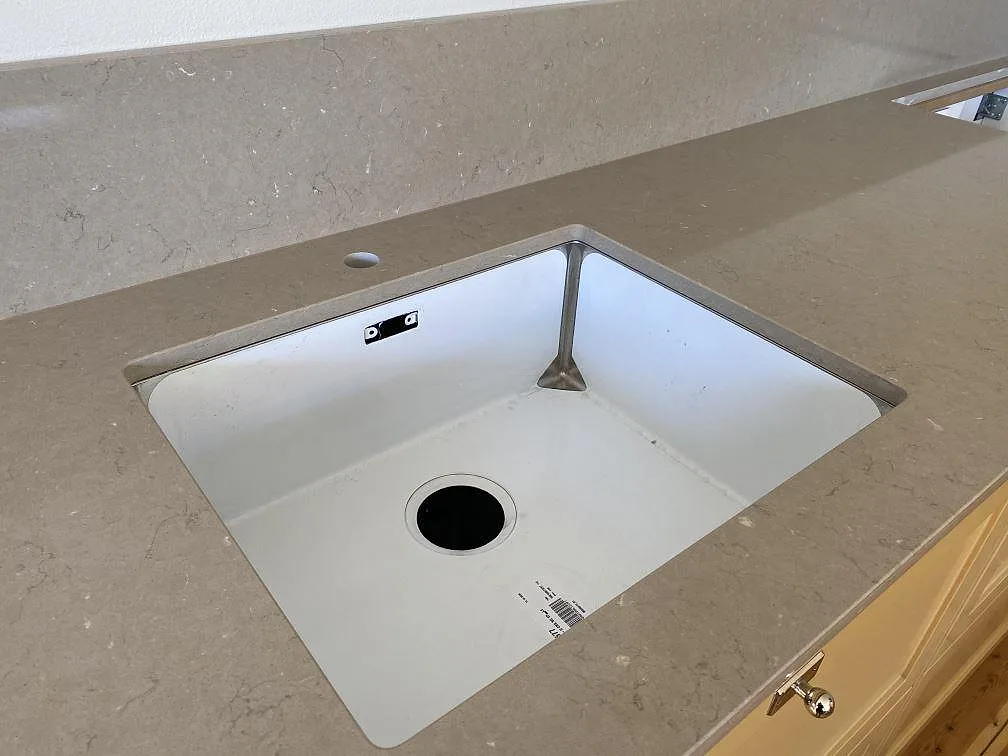
Kitchen worktops in Silestone Coral Clay, a warm grey-beige quartz composite with subtle speckling and a polished surface, 20 mm thick, in a U-shaped layout with an undermount white sink, an upstand and space for a top-mounted hob, paired with butter-yellow cabinet fronts in a kitchen in Skarpnäck.
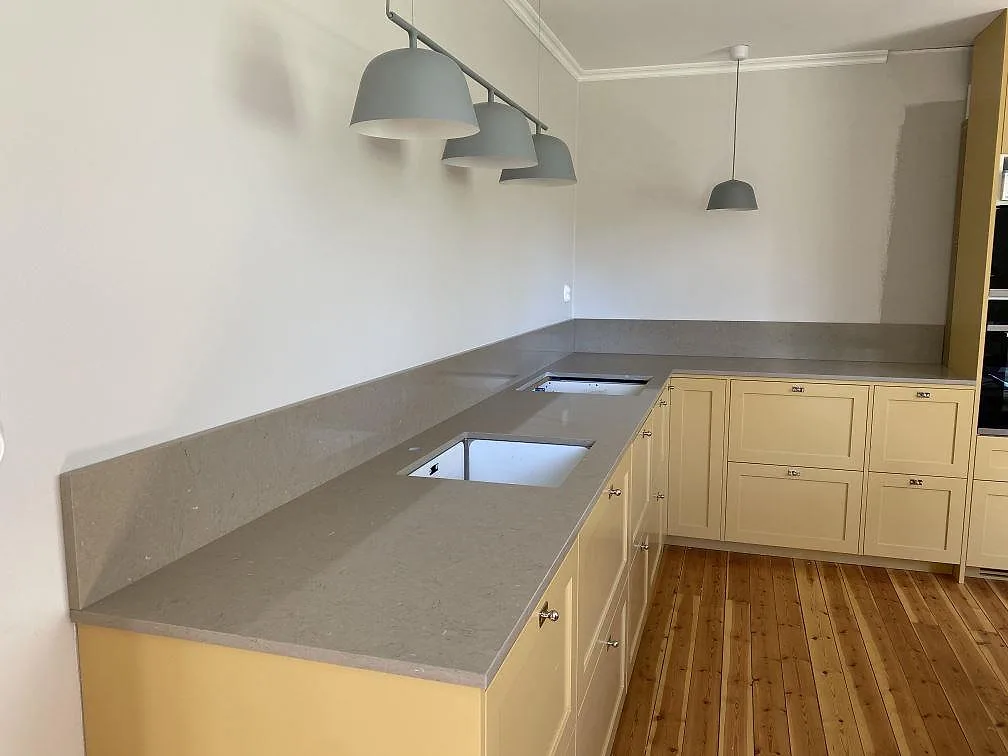
This kitchen in Skarpnäck has worktops in Silestone Coral Clay, a warm grey-beige quartz composite with soft, subtle speckling and a polished surface. The 20 mm thick stone runs in a U-shaped layout with an undermount white sink and a prepared space for a top-mounted hob, while an upstand in the same stone rises against the wall, alongside butter-yellow cabinet fronts with brass knobs.
About the material
The name Coral Clay refers to the stone's warm, clay-inspired colour, a muted grey-beige that is closer to clay and sand than grey. The fine, even speckling gives a soft depth without a distinct pattern. The material is a quartz composite, providing a hard, non-porous surface that withstands everyday kitchen use without needing sealing or being etched by acid.
This installation
The warm grey-beige stone meets butter-yellow cabinet fronts and brass-coloured knobs in a soft, harmonious palette where nothing clashes. The U-shaped layout provides work surfaces along three walls, the undermount white sink is fitted beneath the stone edge for a smooth rim, and the upstand keeps the wall behind the worktop free of joints.
Care advice
The dense surface makes Coral Clay easy to keep clean: water and a mild washing-up liquid are enough, and sealing is never needed. Avoid nylon scouring pads and strong cleaning agents that can wear down the polished surface, and always place a trivet beneath hot saucepans, as quartz composite cannot withstand direct heat.
Worth knowing
The clay-like, grey-beige tone blends into most kitchens and conceals crumbs and small marks well. The polished surface can still show dried stains from red wine, coffee or beetroot, so wipe up strongly coloured spills while fresh to keep the warm colour even.