Malmö 23 October 2021
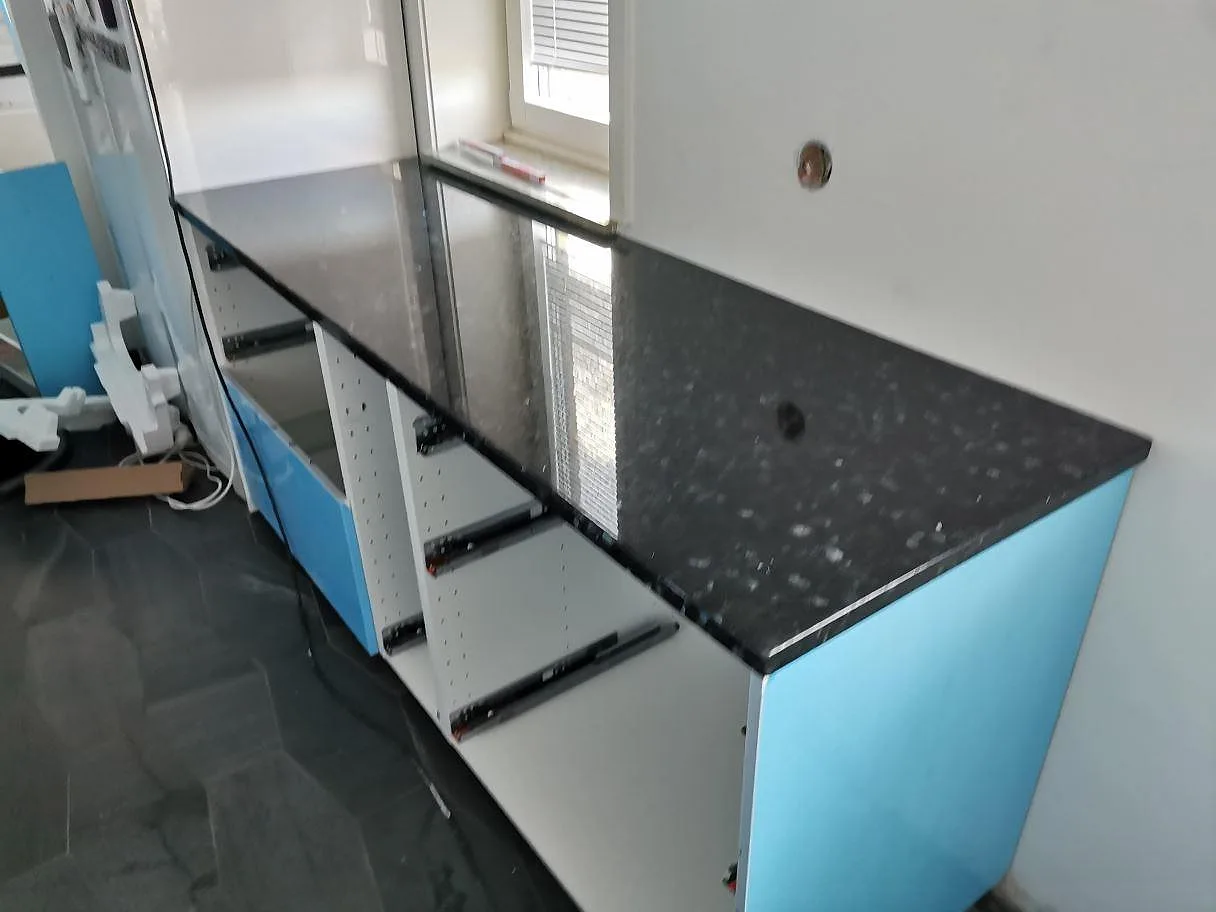
Kitchen worktop in Emerald Pearl, Malmö
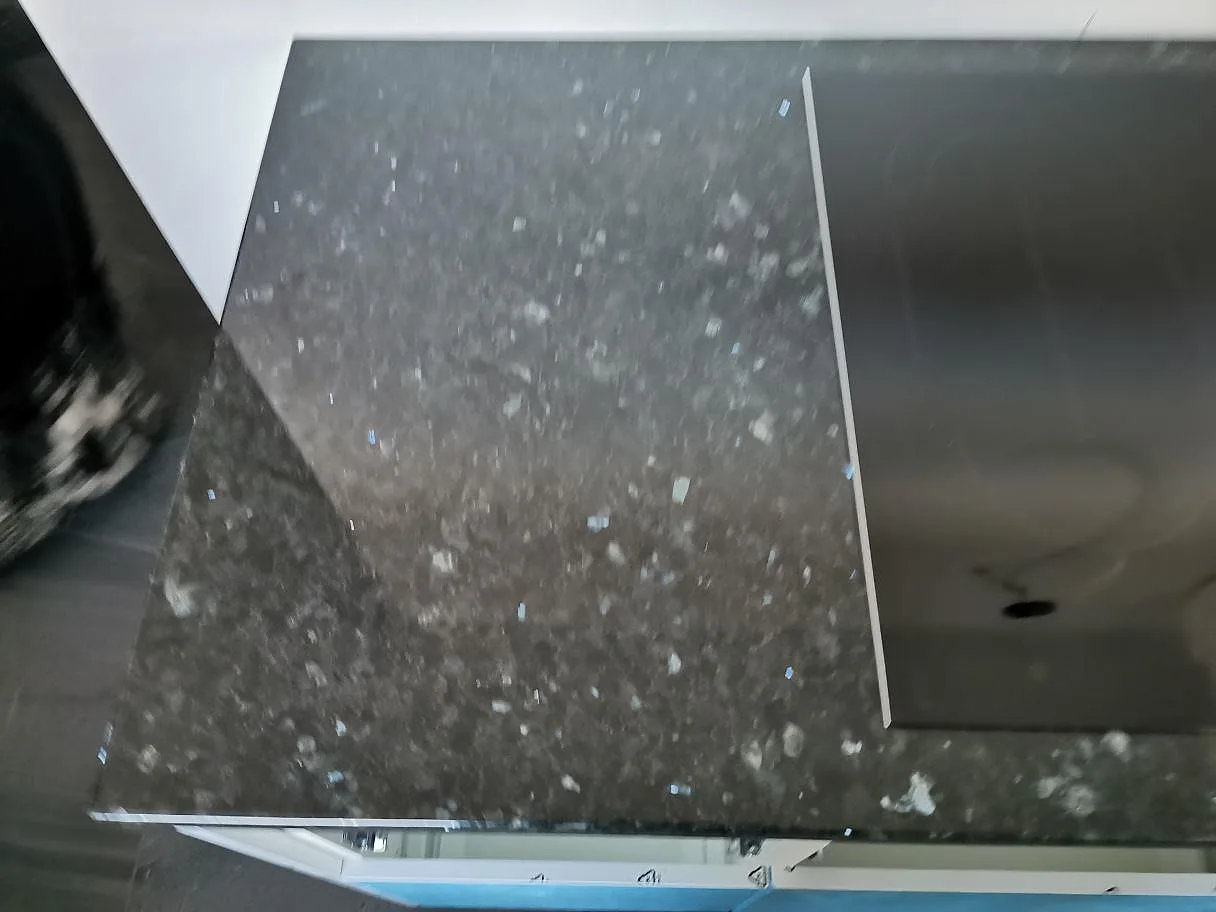
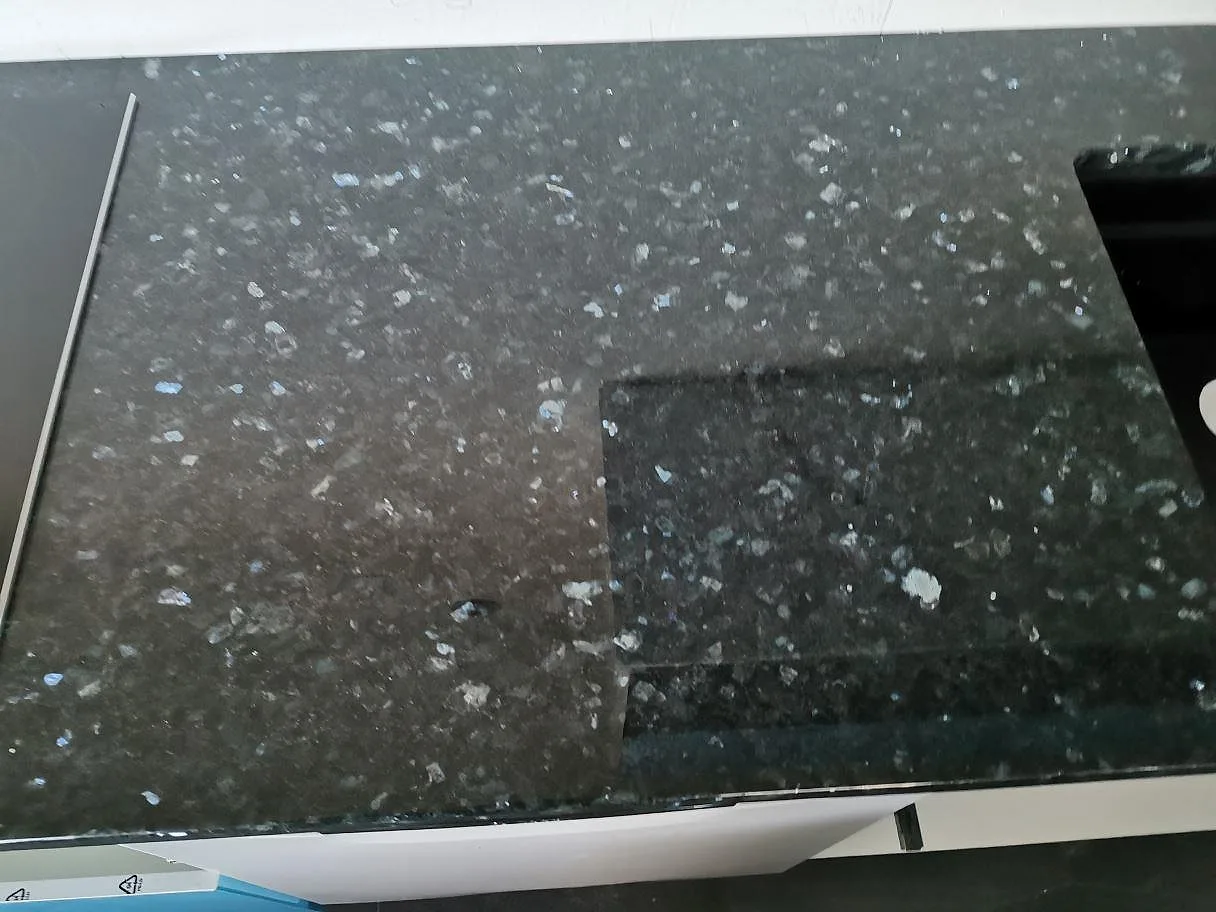
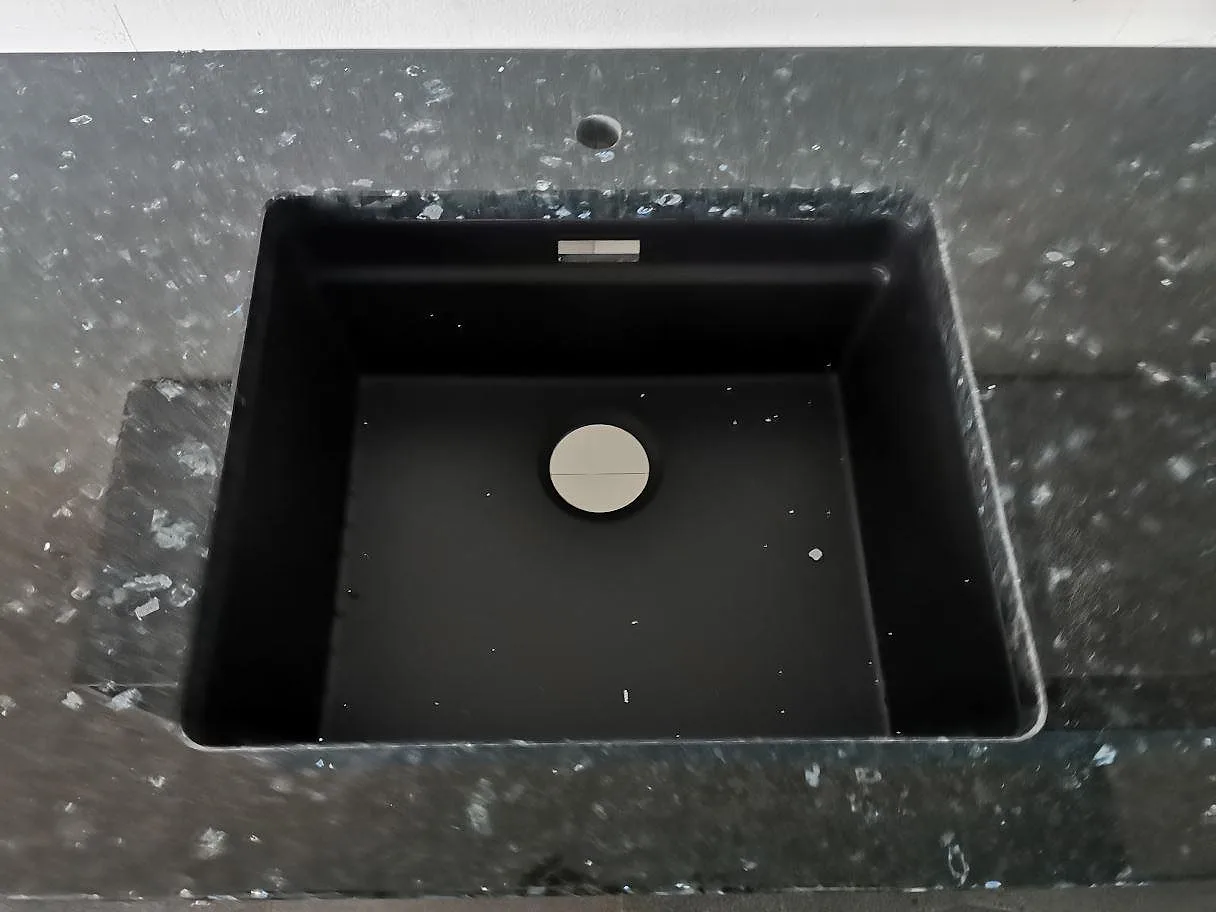
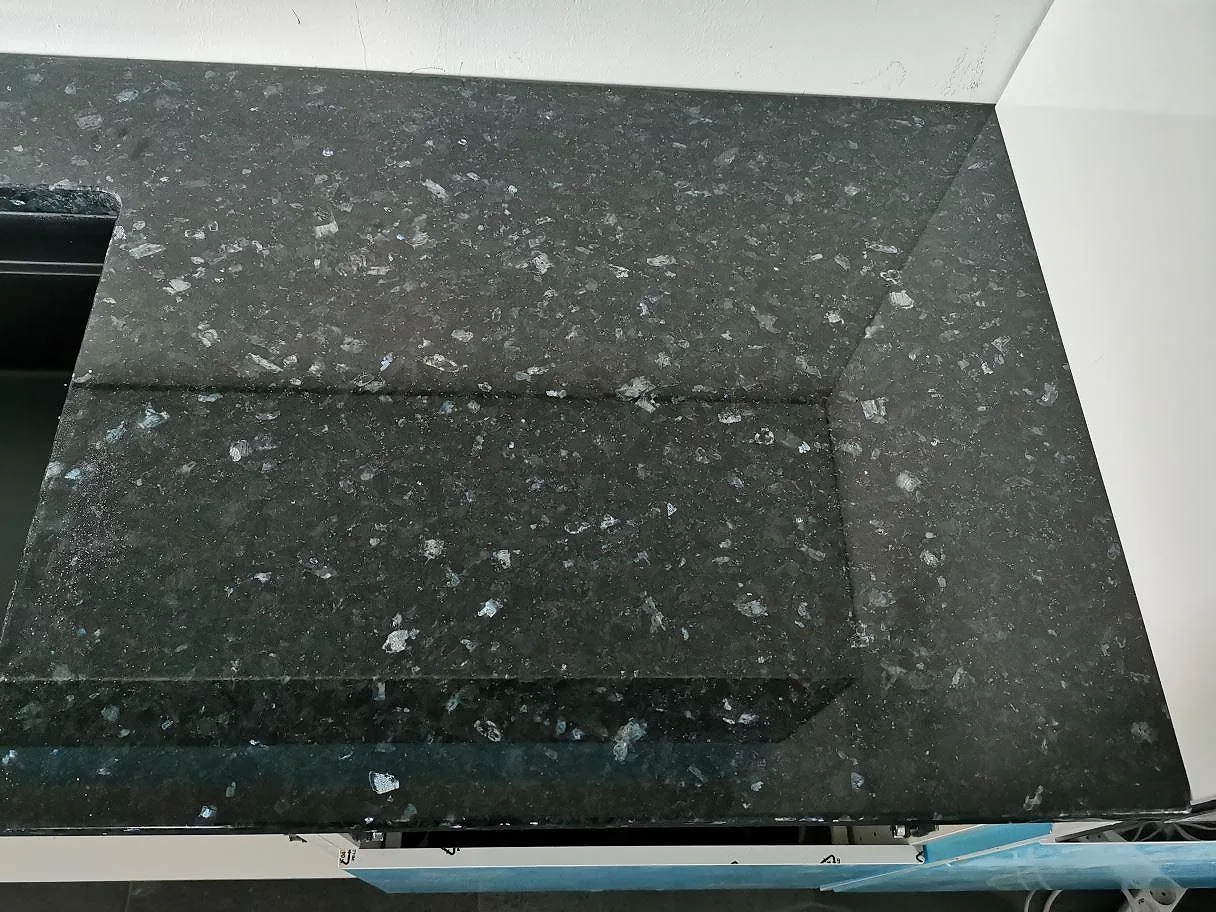
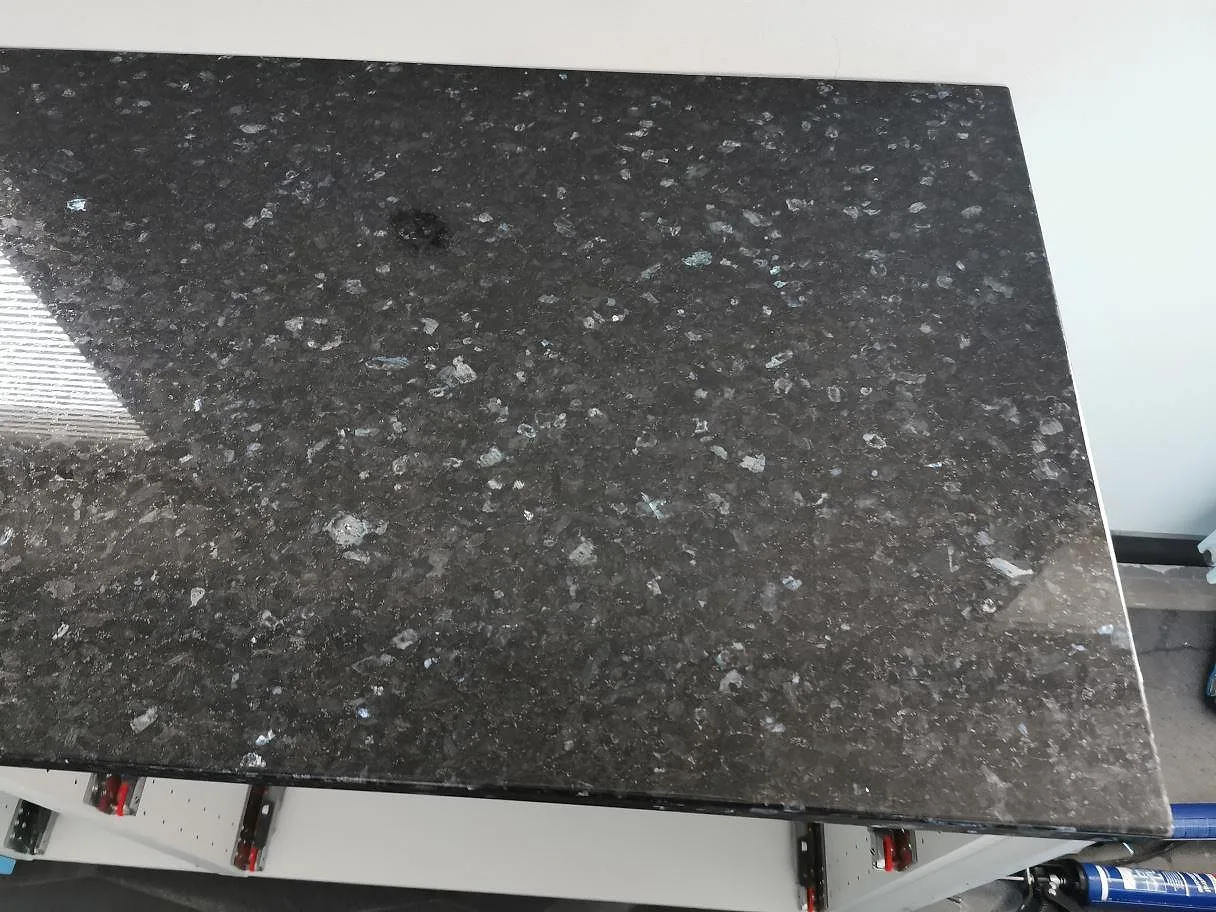
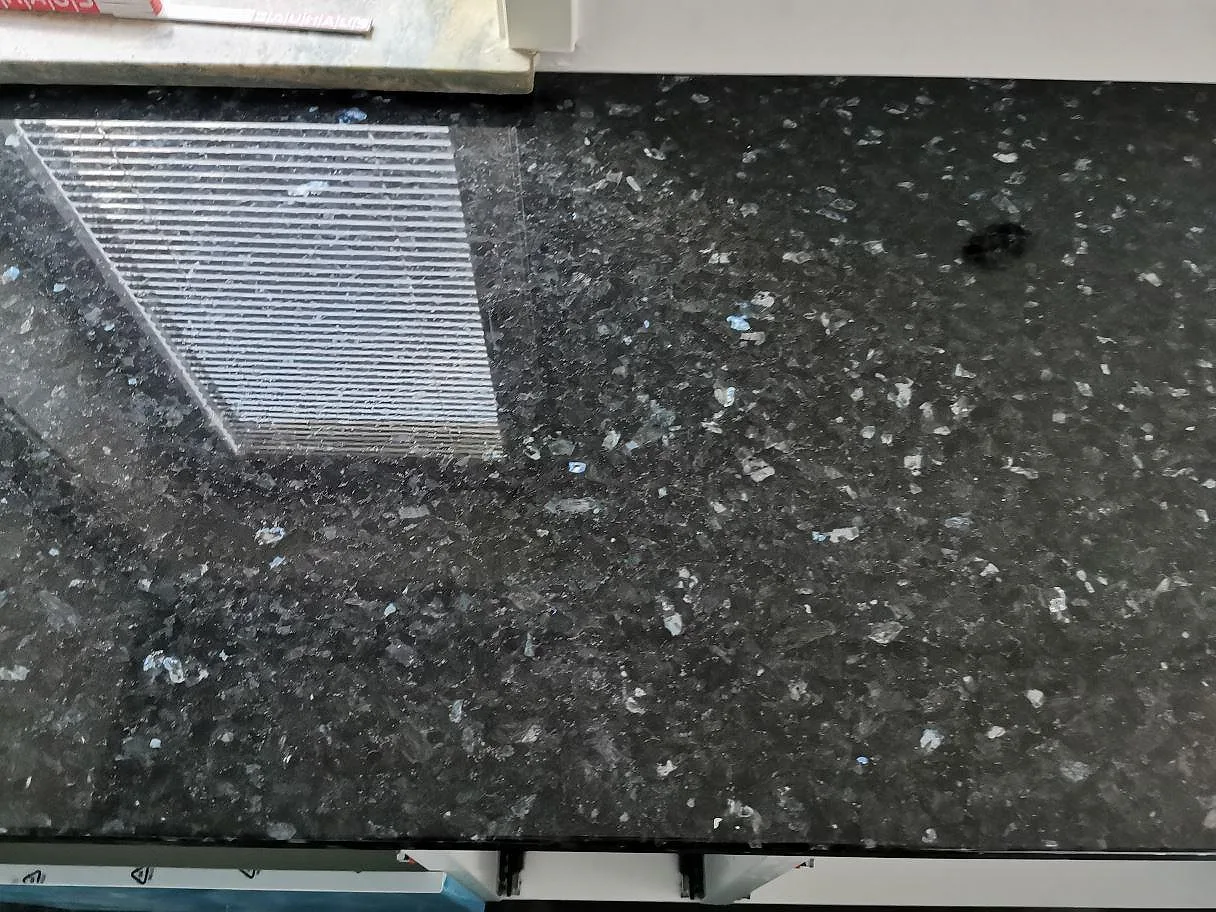
Kitchen worktops in Emerald Pearl, a dark Norwegian granite with blue-green and silvery shimmering labradorite crystals and a polished surface, 30 mm thick, along the wall with a black sink and a hob, against white and bright blue high-gloss cabinet doors, in a kitchen in Malmö.
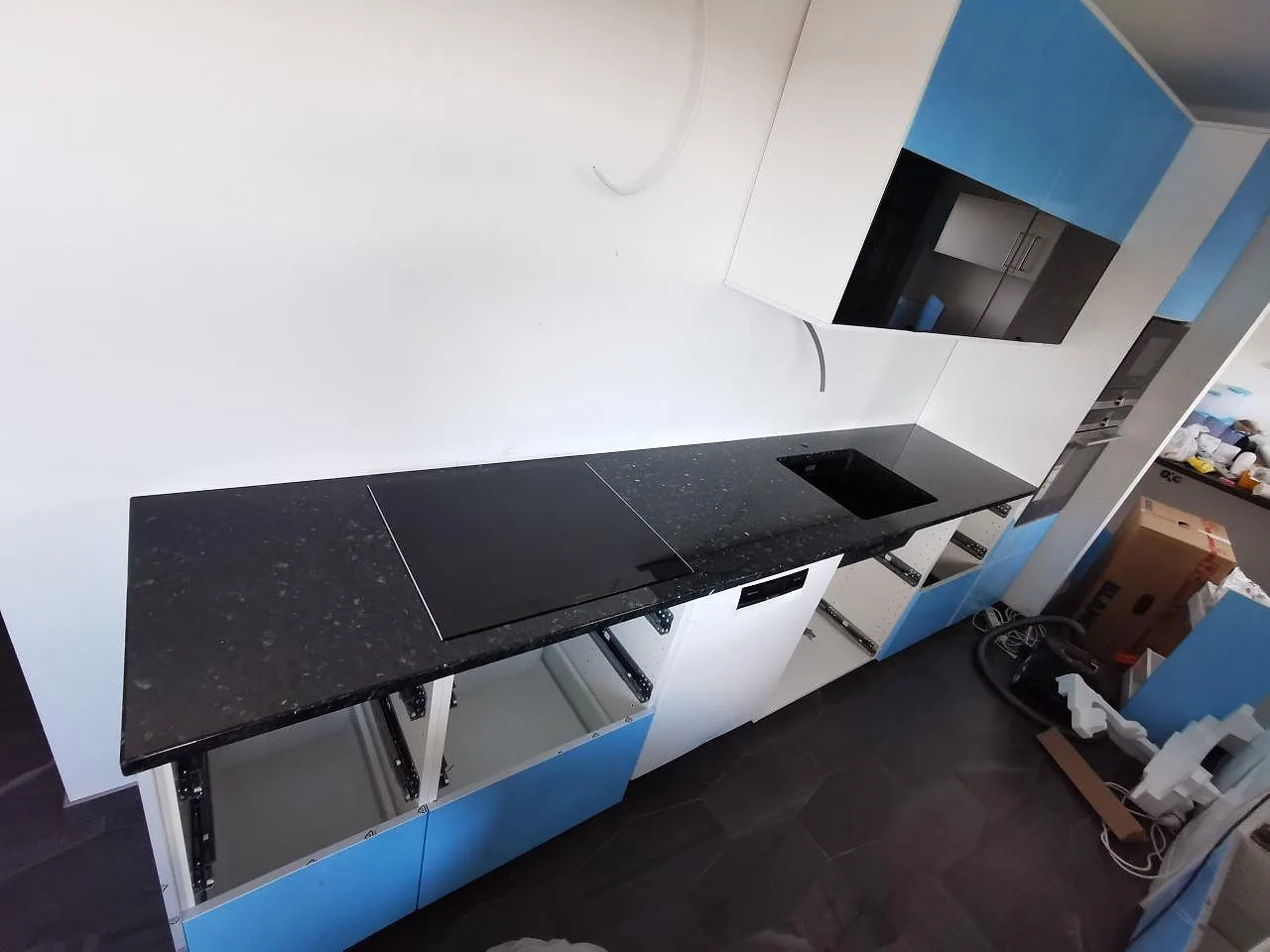
This kitchen in Malmö has worktops in Emerald Pearl, a dark natural stone with a play of blue-green and silvery shimmering crystals and a polished surface. The 30 mm thick stone runs along the wall with a black sink and a hob, against white and bright blue high-gloss cabinet doors.
About the material
Emerald Pearl is a Norwegian granite, a dark, almost black stone in which the mineral labradorite creates a characteristic play of blue-green and silvery shimmering crystals. What makes labradorite special is that its shimmer changes tone depending on the light and viewing angle. The stone looks different throughout the day. Polishing brings out this effect most clearly. Granite is hard, withstands heat and benefits from sealing.
This installation
The colours here have been chosen deliberately: the blue-green play in the stone picks up the bright blue tone of the high-gloss cabinet doors, bringing the shimmer of the granite and the kitchen cabinetry into harmony. The dark, shimmering stone creates a striking contrast with the white areas, and the extra-thick 30 mm edge gives the worktop a solid, substantial presence.
Care advice
Emerald Pearl is durable and easy to maintain. Wipe with a mild, pH-neutral cleaner and avoid harsh, acidic or abrasive products. The stone withstands heat better than most materials, but a trivet still offers useful protection, and sealing helps the dark surface resist stains.
Worth knowing
Dark, polished granite shows dust, fingerprints and wiping streaks clearly, especially when the light falls across it, so a quick wipe is part of the routine. At the same time, the lively labradorite shimmer makes minor everyday marks less noticeable. As the shimmer changes with the light, the stone rarely looks quite the same twice.