Västervik 15 July 2021
Kitchen worktop in Carrara C, Västervik
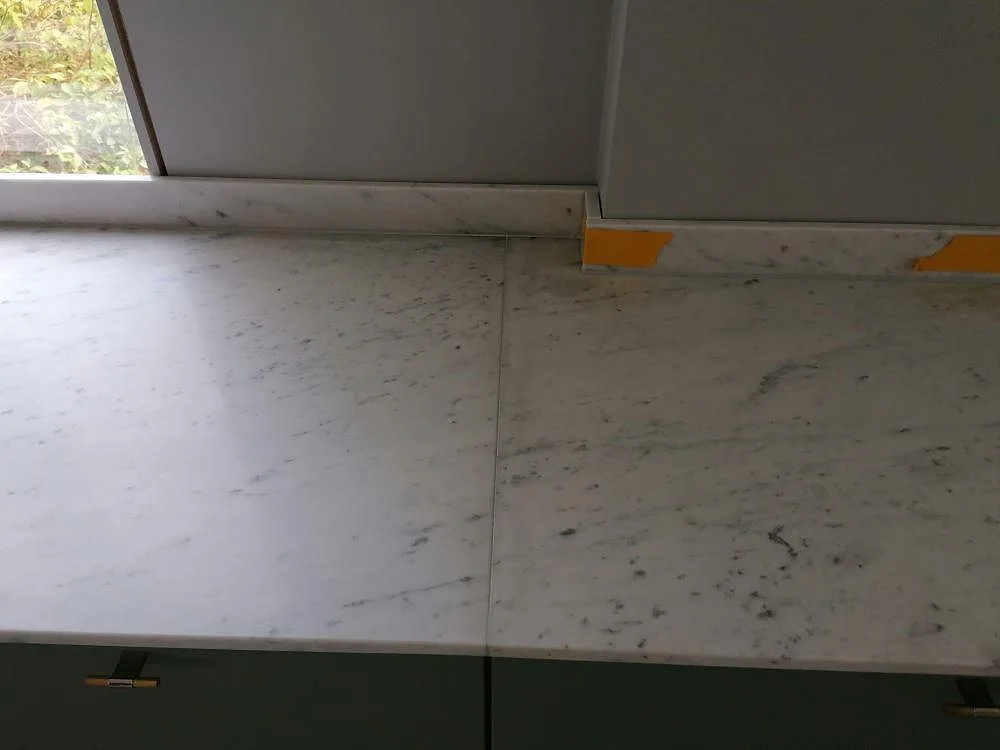
Kitchen worktops and a large kitchen island in Carrara C, one of the palest Italian marbles with fine grey veins on a milky white background and a polished finish, with a low splashback in the same marble and an inset sink, paired with sage green cabinet doors, in a kitchen in Västervik.
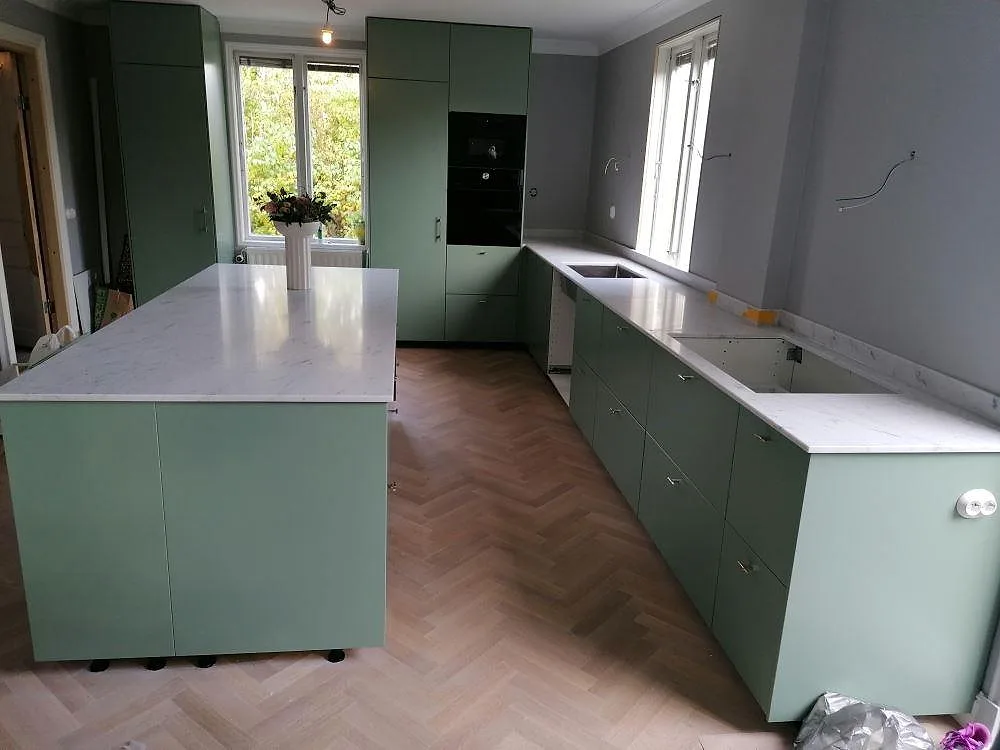
In this kitchen in Västervik, a white Carrara C worktop meets sage green cabinet doors, both along a long wall and on a large kitchen island. A low splashback in the same marble sits behind the worktop, and the long run has space for an inset sink. The floor is laid with herringbone parquet.
About the material
Carrara C is quarried in the Carrara area in Italy and is one of the palest marbles in the family, with fine grey veins across a milky white background. Marble is a calcium-based natural stone with a light, lively appearance, but it is softer than granite and sensitive to acids. Lemon, wine and strong cleaning products can leave dull etch marks on a polished surface. This makes marble a material for those who appreciate stone developing character and patina over the years.
This installation
The white marble brings out the muted sage green cabinet doors and gives the kitchen a light, cohesive work surface where the grey veining stands out clearly against the green. The large kitchen island forms a continuous slab in the centre of the room, a gathering place for cooking and socialising, while the low splashback in the same marble connects the worktop to the wall.
Care advice
Wipe the marble with a mild, pH-neutral cleaner designed for natural stone and avoid acidic or abrasive products. Splashes from acidic foods should be wiped up promptly, and a chopping board and trivets protect the surface when cooking. Regular application of an impregnating sealer makes the stone more resistant to moisture and stains.
Worth knowing
On a large, frequently used kitchen surface, marble is most exposed around the sink and hob, where water and acids can make the polished surface slightly duller over time. Many see the slowly developing patina as part of marble's charm; those who would prefer a completely uniform, unchanged surface should take extra care with acidic liquids.